Tracking · Updated August 2026 · Last verified August 2026
Quick Answer
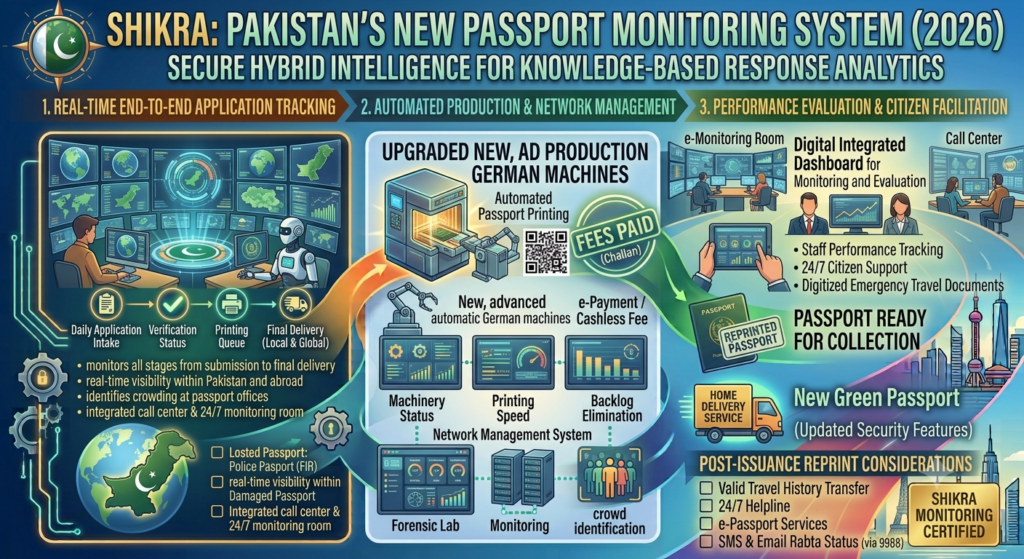
The SHIKRA passport system (Secure Hybrid Intelligence for Knowledge based Response Analytics) is a real time monitoring system DGIP launched on January 26, 2026, covering every stage of a passport’s journey: application, printing, and delivery, both inside Pakistan and at missions abroad. It’s an internal dashboard for DGIP and the Interior Ministry, not a public tracking portal, but it comes with a 24/7 monitoring room and call center that applicants can actually use, and it’s made SMS and status updates more accurate.
Interior Minister Mohsin Naqvi inaugurated the SHIKRA passport system during a visit to DGIP headquarters in Islamabad, alongside a fully digitized Emergency Travel Document process.
What the SHIKRA Passport System Actually Is
The SHIKRA passport system is a digital dashboard that gives DGIP and the Interior Ministry round the clock visibility into the entire passport lifecycle, from the moment an application is submitted to the moment the booklet is delivered. It tracks daily operations, staff performance, application volumes, and even detects overcrowding at individual passport offices so administrators can respond before a backlog builds up. The system also monitors machine uptime, which matters because DGIP has paired the SHIKRA rollout with new automated printing hardware at its production facility.
It’s worth being precise about who the SHIKRA passport system is actually for: the dashboard itself is an internal tool for DGIP and Ministry of Interior staff, not something the public logs into. Applicants don’t get a SHIKRA login; what changes for you is what sits on top of it: the accuracy of the SMS/portal status you already check, and a dedicated helpline that can now see exactly where your file is stuck.
What Changes for Applicants Under the SHIKRA Passport System
- More accurate status updates. SMS and online tracking statuses now update closer to real time, rather than waiting for a batch process.
- A 24/7 helpline with real visibility. The call center staff can see where a specific application is in the pipeline, not just its last recorded status.
- Faster fast track turnaround. Combined with new high speed printing machines, fast track applications are being processed and dispatched within roughly 2 to 4 working days in practice, though DGIP’s official target windows haven’t formally changed.
- Overseas applications are covered too. The SHIKRA passport system monitors missions abroad the same way it monitors domestic offices, so an application filed through a Pakistani embassy or consulate gets the same real time oversight.
- Emergency Travel Documents are now fully digitized. A separate but related change announced alongside the SHIKRA passport system’s launch. See our Emergency Travel Document guide for how to apply for one.
How to Use the SHIKRA Passport System as an Applicant
You don’t access the SHIKRA passport system directly, but you benefit from it through the same channels you’d already use:
- Online. Track your token number or CNIC on the DGIP e Services portal, same as before.
- SMS. Send your 11 digit token number to 9988 for an instant status reply.
- 24/7 Helpline. Call the DGIP helpline for a status check backed by real time data rather than the last logged update.
For the full walkthrough of every tracking method, including what each status label means, see our passport tracking guide.
Understanding Your Status Under the SHIKRA Passport System
| Status | What It Means |
|---|---|
| Under process | Application received and moving through verification; normal. |
| Delayed | The system has flagged this application as behind schedule. Call the 24/7 helpline or visit your Regional Passport Office with your token. |
| Deferred | Usually a minor verification issue or missing document. Visit your RPO with your original CNIC and token to resolve it. |
| In Printing | Data verified and approved; the booklet is being printed. |
| Dispatched / Ready for Collection | On its way to your office, or available for pickup. |
“Delayed” and “Deferred” are two statuses worth knowing apart. “Delayed” means the SHIKRA passport system itself has flagged your file as behind its expected pace; that’s your cue to call the helpline. “Deferred” usually points to a document or verification issue on your end, which means a helpline call won’t resolve it; you’ll need to visit your Regional Passport Office in person with your CNIC and token.
Practical Note
The SHIKRA passport system is barely a few months old as of this writing, and coverage of it so far comes mostly from ministry statements and press briefings rather than independent verification of the 2 to 4 day fast track figure. Treat that number as a reasonable current estimate, not a guaranteed turnaround, and if you’re relying on it for a specific date, confirm with the helpline rather than planning around it exactly.
Worth knowing: between April 29 and May 5, 2026, a technical fault at DGIP headquarters suspended passport issuance nationwide and at Pakistani missions worldwide for about a week, before being restored mission by mission. It’s a reminder that “real time monitoring” doesn’t mean the underlying system is immune to outages; if the portal or SMS tracker seems unresponsive rather than just slow, check DGIP’s official site for a service notice before assuming something is wrong with your specific application.
Frequently Asked Questions
Can I log into the SHIKRA passport system myself to check my application? No, the dashboard is an internal tool for DGIP and the Ministry of Interior. You still check your status through the DGIP portal, SMS to 9988, or the helpline; the SHIKRA passport system just makes what those channels show you more accurate.
Does the SHIKRA passport system mean my passport will be printed faster? Indirectly, yes. By monitoring machine downtime and staff performance, the SHIKRA passport system helps keep the new automated printing equipment running closer to capacity, which has shortened turnaround, especially for fast track applications.
Does the SHIKRA passport system cover applications filed abroad? Yes. It monitors DGIP’s global missions the same way it monitors domestic offices, so applications filed through an embassy or consulate get the same real time oversight as domestic ones.
What should I do if my status shows “Delayed”? Call the 24/7 DGIP helpline or visit your Regional Passport Office with your token; staff can now see exactly where the bottleneck is rather than just the last logged status.
What should I do if my status shows “Deferred”? This usually points to a minor verification issue or a missing document. Visit your Regional Passport Office in person with your original CNIC and token to resolve it; a phone call typically won’t fix this one.
Did the SHIKRA passport system change the official processing time windows? Not officially; DGIP’s published normal, urgent, and fast track windows haven’t changed on paper. What’s changed in practice is that fast track applications are commonly being dispatched within 2 to 4 working days, closer to the target and with fewer of the delays that used to push it past that window.
Did the SHIKRA passport system prevent the passport system outage in 2026? No; in late April and early May 2026, a technical fault at DGIP headquarters suspended passport issuance nationwide and at all foreign missions for about a week. The monitoring dashboard didn’t stop the outage; its value is in tracking and responsiveness during normal operation, not immunity from system wide failures. If tracking suddenly stops responding for everyone rather than just your application, check for an official DGIP service notice before assuming your specific file has a problem.
Bottom Line
The SHIKRA passport system doesn’t give you a new tool to check your own passport status; it’s an internal system that makes the tools you already use (SMS, the online portal, the helpline) more reliable, and it’s shortened real world turnaround for fast track and overseas applications. The practical takeaway: if your status seems stuck, the helpline is now a genuinely useful first call rather than a formality, since the person on the other end can actually see where your file is.
For more passport guides, visit Zippify.
Next: Pakistani Passport Reprint: Lost, Damaged, or Exhausted Passport